Thinking about buying raw land in Dale? A beautiful piece of acreage can look simple at first glance, but unimproved land often comes with big practical questions. Before you fall in love with the view, it helps to know how access, utilities, septic, and county records can affect what you can actually do with the property. This guide will walk you through the key feasibility checks so you can move forward with more confidence. Let’s dive in.
Why buying acreage in Dale is different
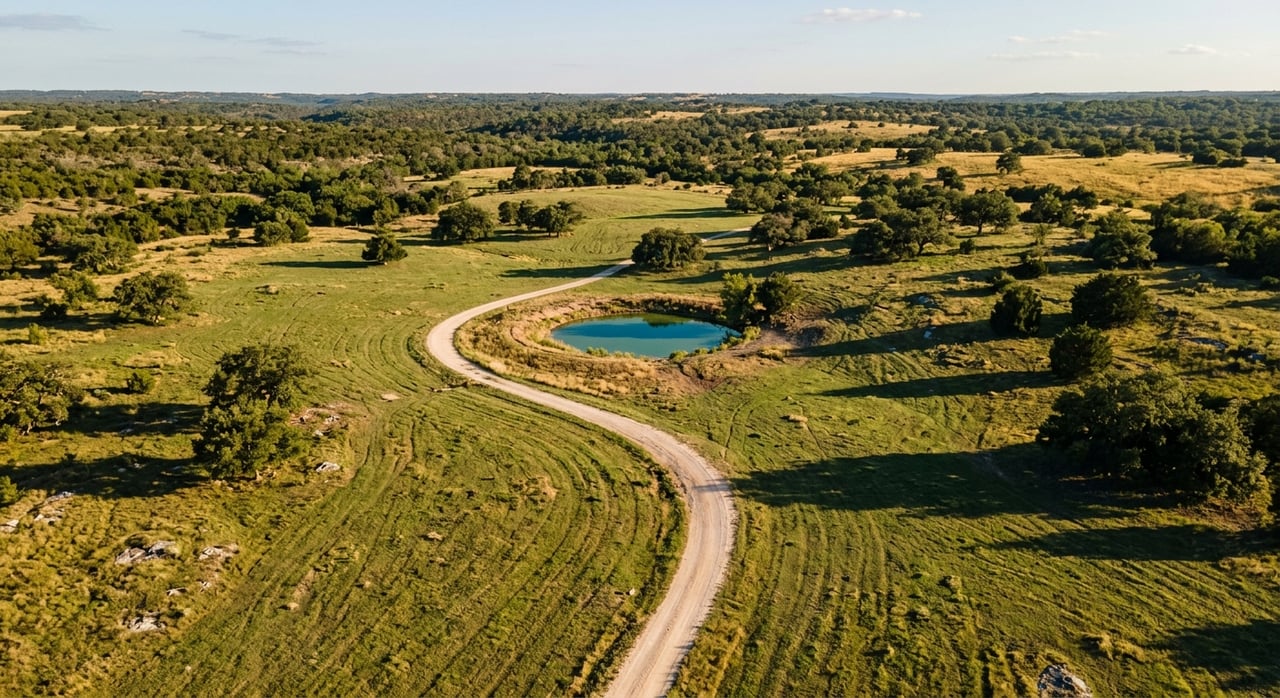
In Dale, buying unimproved acreage is less about choosing a homesite and more about confirming what the land can realistically support. Caldwell County has stated that counties do not have zoning or city-style land-use powers, so the real due diligence usually centers on access, plats, easements, utilities, septic, and floodplain issues.
That matters because a tract that looks usable from the road may still need more research before it is ready for a home, driveway, or future split. For most buyers, the first practical stops are county development staff and county records.
Start with county records first
Before closing on raw land, verify the basics in the public record. The Caldwell County Clerk is the official record keeper for deeds, plats, and other real-property records, which makes that office an important source for confirming how the tract is described and recorded.
Caldwell County Sanitation and Development Services is also a key resource. The county handles septic permits, subdivision meetings, residential and commercial site construction permits, floodplain management, and platting, so this office often helps answer the question buyers care about most: Can this land support my plans?
What to confirm in the records
When reviewing a tract, focus on a few core items:
- Legal access
- Recorded plat status
- Easements for utilities or drainage
- Floodplain considerations
- Any permits or approvals that may be needed before improvement
If you are buying with plans to build, divide, or improve the property later, these details can shape both your timeline and your budget.
Check access before anything else
One of the biggest mistakes acreage buyers make is assuming visible access is legal access. A dirt lane, worn path, or neighbor-friendly entry point does not automatically mean the tract has the kind of recorded access needed for future use.
Caldwell County’s development ordinance requires access to an existing public state roadway, county road, or private street for proposed parcels that do not fall within an exemption. That makes access one of the first items to confirm before closing, especially if you plan to build or further divide the property.
Private roads and larger rural tracts
For certain rural farm and ranch tracts that are generally 50 acres or more, the county allows private gravel roadways when no existing public roads are available. Those roads must meet specific requirements, including an all-weather surface, a 60-foot right-of-way, and a recorded maintenance agreement if they are not paved to county standards.
If the tract you are considering depends on a private road, ask questions early. Road standards, maintenance obligations, and recorded agreements can all affect long-term ownership costs.
Driveways may need permits
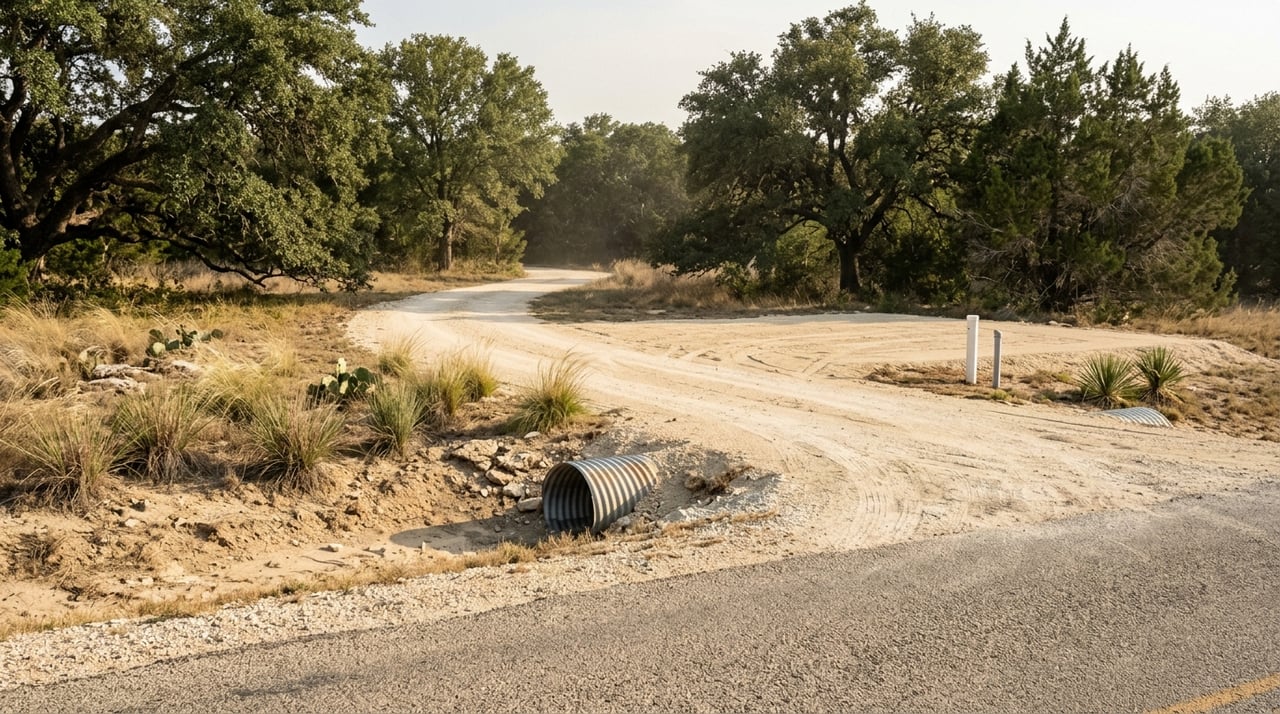
Even after access is confirmed, the actual driveway may require county review. In Caldwell County, a new driveway or an improvement to an existing driveway can trigger a driveway permit application, and the county reviews the site-construction permit and driveway permit together.
Work within the public right-of-way also requires a county permit. That means your budget should account for more than just clearing land. Entrance work, culverts, and permit coordination may be part of the process.
Confirm rural addressing
Acreage buyers sometimes overlook something basic but important: the property address. Caldwell County has a 9-1-1 Rural Addressing program with a request form for new addresses.
If the land is unimproved, verify whether an address already exists or whether one will need to be assigned before construction begins. It is a small step, but it can affect planning, service setup, and project coordination.
Understand water options early
Water is one of the most important feasibility questions on raw land. In parts of the area, utility service may be available. For example, Martindale Water Supply Corporation states that its service area includes southern Caldwell County.
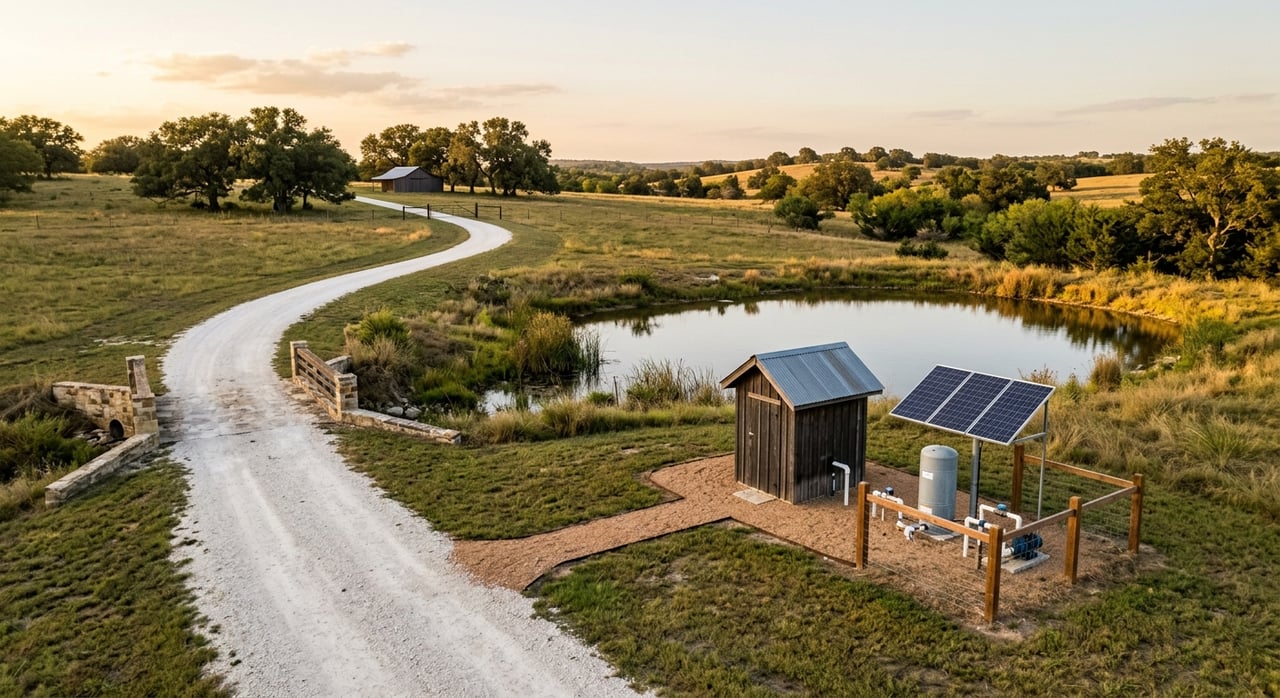
If the tract is not served by a utility system, a private well may be the alternative. That can work well for some buyers, but it also adds another layer of planning and cost.
If the tract needs a well
The Texas Department of Licensing and Regulation regulates private water-well drilling and pump installation. The Texas Water Development Board says there is no statewide minimum acreage required to drill a well, although local entities and groundwater conservation districts may have their own requirements.
Private well owners are also responsible for water quality, because there is no regulatory oversight that ensures it for private wells. In practical terms, that means you should ask not only whether a well can be drilled, but also how that choice may affect your timeline, vendor coordination, and future maintenance.
Plan for septic, not city sewer
Many unimproved rural tracts in Dale will need an on-site sewage facility rather than a municipal sewer connection. The Texas Commission on Environmental Quality says permits are required for on-site sewage facilities, including septic systems and holding tanks.
A permit and approved plan are needed to construct, alter, repair, extend, or operate the system. Caldwell County’s Sanitation office lists septic permits and related inspections as an appointment item, so it makes sense to explore septic feasibility early in the process.
Why septic should be checked early
Septic is not just a paperwork item. It can influence where you place a home, how you design improvements, and whether the tract works for your intended use.
If you wait until after closing to ask septic questions, you may discover added costs or layout limitations that change the value of the land to you. For that reason, septic feasibility is one of the smartest early checkpoints for raw acreage.
Verify electric service details
Bluebonnet Electric lists Dale in its Caldwell County service area, so electric coverage exists in the community. Still, that does not mean every tract is ready for simple plug-and-play service.
With raw land, service can be very site-specific. Before you finalize your budget, confirm the likely meter location, possible pole or transformer needs, and any line-extension questions directly with the utility.
Review floodplain and drainage issues
Floodplain review should be part of any acreage purchase. Caldwell County’s ordinance treats floodplain impacts as a formal review issue, and the county’s sanitation page directs buyers to floodplain management resources and FEMA map information.
Even land that appears dry during a showing can have drainage or floodplain constraints that affect building plans, access improvements, or future subdivision potential. This is another reason county review matters so much in a raw land purchase.
Do not assume fences mark boundaries
A fence line may look established, but it should not be treated as proof of the legal boundary. Boundary questions should be checked against deeds, plats, and any available survey information.
This is especially important on rural acreage, where older fencing may have been placed for practical use rather than exact legal lines. If your plans depend on exact boundaries, a survey and title review are usually money well spent.
Budget for the land beyond the purchase price
Unimproved acreage often needs more upfront planning than buyers expect. The purchase price is only part of the equation.
A realistic budget may include:
- Survey and title review
- Driveway or access work
- Culverts or road improvements
- Electric service coordination
- Water system connection or well work
- Septic planning and permitting
- Floodplain review
- Fencing
- Contingency funds
Caldwell County’s site-construction rules even ask applicants for an estimate of probable cost. That is a good reminder that the first dollars you spend may go toward site preparation rather than the home itself.
Check property taxes early
Before you buy, confirm the current tax bill and valuation status with the Caldwell County Appraisal District. This helps you understand the property’s current carrying cost and gives you a clearer picture of your ongoing ownership expenses.
Taxes may not be the most exciting part of buying land, but they are part of your real budget. It is better to understand them early than be surprised later.
The three biggest questions to answer
Most Dale acreage purchases come down to three practical questions: can you build on it, can you access it, and can you utility it? If you can answer those clearly, you are in a much stronger position to judge whether the property is priced appropriately for the work it will require.
That is where local guidance can make a real difference. With rural land, details matter, and the best opportunities are usually the ones that have been carefully vetted before closing.
If you are considering unimproved acreage in Dale, working with a local team that understands rural property can help you ask better questions from the start. To talk through a tract, your goals, and the right next steps, Rodgers Realty Team is here to help.
FAQs
What should you verify before buying unimproved acreage in Dale, TX?
- You should verify legal access, recorded plats, easements, water options, septic feasibility, electric service details, floodplain concerns, and property tax information before closing.
Does unimproved land in Dale, TX have zoning restrictions?
- Caldwell County has stated that counties do not have zoning or city-style land-use powers, so buyers usually need to focus on access, utilities, septic, platting, and floodplain issues instead.
Can you assume a dirt road gives legal access to acreage in Dale, TX?
- No. Visible access does not always equal legal access, so you should confirm recorded access and how the tract connects to a public road or qualifying private street.
Do you need a septic permit for raw land in Dale, TX?
- Yes. If the property will use an on-site sewage facility, permits and an approved plan are required for construction, repair, alteration, extension, or operation.
Is electric service available for acreage in Dale, TX?
- Bluebonnet Electric lists Dale in its service area, but each tract can still require site-specific coordination for meter placement, poles, transformers, or line extensions.
Should you trust existing fences as property boundaries in Dale, TX?
- No. Existing fences should not be assumed to mark legal boundaries, so buyers should review deeds, plats, and survey information carefully.