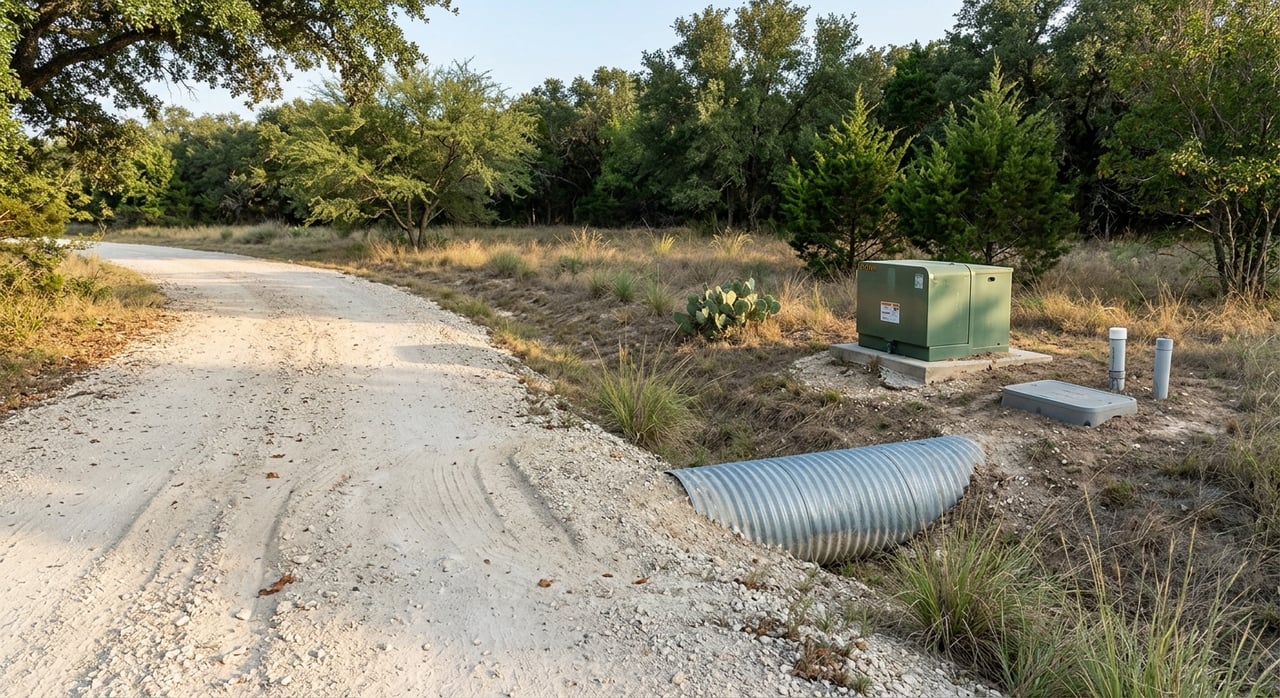
If you are eyeing a land project in Waelder, the biggest mistake is assuming a cheap tract automatically means an easy win. In a small market like this, the details matter more than the hype. You need to know how local access, utilities, and county review can shape the outcome before you buy. That is exactly where a smart plan starts, so let’s dive in.
Why Waelder Gets Investor Attention
Waelder is a small incorporated city in Gonzales County on SH 90, about two miles north of I-10 and roughly eighteen miles north of Gonzales. The city covers about 1.28 square miles, which makes it a compact market with limited scale. That matters because land opportunities here are not the same as high-volume suburban plays in faster-growth areas.
The local story is tied to agriculture, ranching, and transportation access. According to the city history, Waelder was laid out as a rail shipping point for the surrounding area, and local business activity declined after I-10 was built south of town. Today, that points to a market shaped more by corridor access and rural land use than by dense in-town growth.
Gonzales County also markets itself as being near San Antonio, Austin, and Victoria, with a lower cost of living and small-town character. That regional positioning helps explain why buyers and investors continue to look at land in the county. Still, in Waelder, demand appears more likely to come from rural buyers, commuters, and small operators than from large-scale suburban subdivision demand.
What Makes Waelder A Smart Bet
For the right project, Waelder can make sense. The strongest case is not rapid speculation. It is a simple, well-planned land play with a clear path to water, wastewater, access, and local approvals.
Texas A&M's Texas Real Estate Research Center reported that the Texas rural land market remained resilient through 2025, though performance varies by region. In Waelder, that supports a selective approach rather than a blanket assumption that every tract is a good buy. A property can be investable, but only if the basics work.
In practical terms, Waelder looks better suited for:
- Small-scale tract development
- Simple lot splits
- Utility-verified rural homesites
- Projects aimed at local buyers or commuters
- Land uses that fit a thin rural market
That conclusion is based on the city's size, infrastructure profile, and the county's regulatory process. If your plan depends on fast absorption across many lots, Waelder may not offer the pace you need.
Utilities Should Be Your First Filter
In Waelder, utility questions should come before your financial model gets too far. The City of Waelder has an active municipal water utility registration with the Texas Public Utility Commission, and the city's 2024 Consumer Confidence Report says it provides groundwater from the Carrizo-Wilcox aquifer in Gonzales County. That is encouraging because it points to an established public water system rather than a brand-new service setup.
The displayed 2024 water-quality tables show no violations for the listed categories, including lead and copper, disinfection by-products, inorganic contaminants, radioactive contaminants, volatile organic contaminants, and chlorine residual. That does not remove all project risk, but it does suggest the city operates a functioning system you can evaluate directly.
Even so, you should not assume service availability just because a tract is nearby. Public Utility Commission critical-load filings show that Waelder treats pump houses, booster pumps, wells, the sewer plant, and multiple sewer lift stations as critical facilities. That is a strong reminder that capacity and service logistics matter just as much as frontage.
PUC filings also reference the Waelder Electric Department, which suggests utility coordination is local and municipal in character. In a place like this, early conversations with the city and utility staff can be more important than broad market assumptions.
Sewer Or Septic Can Change The Deal
One of the biggest swing factors for a Waelder land project is whether the tract can connect to sewer or will need septic. If the property sits outside practical sewer reach, on-site sewage facilities become a major part of due diligence.
Gonzales County says OSSF permitting is governed by state law, and the county permit office handles septic permits. The same office also handles floodplain permits, driveway permits, county road bore permits, waterline permits, utility and pipeline installation requests, and subdivision applications. That means several pieces of your project may run through one local permitting track.
The county also offers 90-day temporary, long-term, and temporary water line permits. For phased projects or construction sequencing, that can become important earlier than many buyers expect. If your timeline depends on temporary service, you need to confirm that path before you close.
Know Who Regulates The Tract
Before you underwrite any Waelder-area property, figure out exactly which jurisdiction controls it. Gonzales County's subdivision rules apply to unincorporated areas, except in ETJ areas where a city has a written delegation or joint review arrangement. In simple terms, you need to know whether the land is inside city limits, inside the ETJ, or under county subdivision control.
This step matters because a lot split is not always just a survey job. The county adopted its subdivision rules in part because unmanaged subdivision can strain roads, 9-1-1 addressing, emergency response, water and utility availability, wastewater disposal, and floodplain management. For rural land, that can turn a seemingly simple plan into a more involved approval process.
If you need an exception to the county subdivision rules, Gonzales County requires:
- A $100 non-refundable fee
- A signed application from the legal owner
- A survey or sketch plan
- Lot boundary details
- Adjacent road information
- Adjacent property owner information
The county states that no application will be scheduled until the required information is complete. That makes preparation a real part of project risk management.
Site Design Details Matter More Here
In a small rural market, basic site design can make or break feasibility. Gonzales County's subdivision order includes practical utility standards that investors need to understand before planning improvements.
For example, utilities generally must be placed within easements of at least 15 feet. Utility lines that cross a road must be installed at specified depths and encased when required. The order also says the applicant must acquire off-site easements needed for public improvements and reimburse the county if the county assists with that acquisition.
Those are not small details. They affect layout, cost, and timing. A tract that looks straightforward on paper can become more expensive once utility routing, road crossings, and off-site easement needs are mapped out.
Floodplain And Access Are Not Side Issues
Floodplain review can also shape your project budget and timeline. Gonzales County has a separate floodplain permit process, with a $100 residential fee and a $350 commercial fee. Even in a rural setting, drainage and floodplain review can become a meaningful deal variable.
Road access deserves the same level of attention. Driveway permits, road bore permits, and utility installation requests may all factor into how usable the tract really is. If access improvements are needed, your true development cost may be higher than the purchase price suggests.
When Waelder Is A Good Fit
Waelder can be a smart bet when your project is modest, utility-aware, and matched to local demand. The town's location near I-10 and within Gonzales County's broader regional access story gives it a logical appeal for buyers who want a rural setting with connectivity to larger markets.
The strongest opportunities are likely projects such as:
- A few rural homesites with confirmed water strategy
- Small lot splits with legal access and permitting clarity
- Tracts aimed at commuter or lifestyle buyers
- Land projects that do not depend on rapid retail-style absorption
This is where local knowledge matters. In a market like Waelder, success often comes from avoiding bad assumptions rather than chasing the biggest upside story.
When Waelder May Not Be The Right Bet
Waelder may be less attractive if your business plan depends on scale, speed, or minimal entitlement work. The local evidence points to a thin market, a small physical footprint, and infrastructure questions that need direct verification.
That does not mean the town lacks opportunity. It means the opportunity is narrower and more specific. If your model requires fast lot absorption, easy utility extensions, or little county review, you may be disappointed.
A Practical Waelder Due Diligence Checklist
Before you move forward on a Waelder tract, work through the basics in a disciplined way.
- Confirm whether the property is in city limits, the ETJ, or county jurisdiction
- Verify water meter availability or water service path
- Determine sewer access versus septic requirements
- Check floodplain exposure and permit needs
- Review driveway access and road frontage conditions
- Identify any off-site easement needs
- Ask whether temporary water line permits may be needed for phasing
- Clarify utility coordination with city departments where applicable
If those boxes check out, Waelder may offer a practical entry point for a small land project. If they do not, the deal may be riskier than the price makes it seem.
The Bottom Line On Waelder Land Projects
Waelder is not the kind of place where a big speculative land play automatically pencils out. It is a small Central Texas market where simple, serviceable, well-scoped projects appear to have the strongest fit. If you stay focused on utility feasibility, jurisdiction, access, and realistic absorption, Waelder can absolutely be worth a serious look.
If you are weighing a tract in Waelder and want experienced guidance on rural property, acreage strategy, or small land project positioning, Rodgers Realty Team is here to help.
FAQs
Is Waelder a good place for a large subdivision project?
- Waelder appears better suited for small-scale land projects than large speculative subdivisions, based on its compact size, utility considerations, and thin rural market conditions.
What utilities should you check first for land in Waelder?
- You should start with water availability, wastewater capacity or septic feasibility, and local utility coordination through the city where applicable.
Does Gonzales County review land splits near Waelder?
- Yes, depending on whether the tract is in the county, city limits, or the ETJ, subdivision and permit review may apply through Gonzales County and possibly city-related processes.
Can septic approval affect a Waelder land project?
- Yes, if a tract is outside sewer reach, septic permitting becomes a major due diligence item through the Gonzales County permit office.
Does floodplain review matter for Waelder land?
- Yes, Gonzales County has a separate floodplain permit process, so drainage and floodplain conditions can affect cost, timing, and feasibility.